My Wonderful Photographic Experience as Red-Necked Grebes Nesting in a Calgary Pond Bring a Baby to the World
Photographs may be clicked for enlargements

STORY, PHOTOGRAPHS AND VIDEOS
By MALIK MERCHANT
For Saturday July 22, 2023, I had planned to drive to the Kananaskis Country. The latest weekly Bear Report that I subscribe to stated: “It is berry season (and the crop is looking good) and there continues to be a lot of bear activity in the Bow Valley and Kananaskis Country as the bears are taking full advantage of the abundance and feeding on ripe berries.”
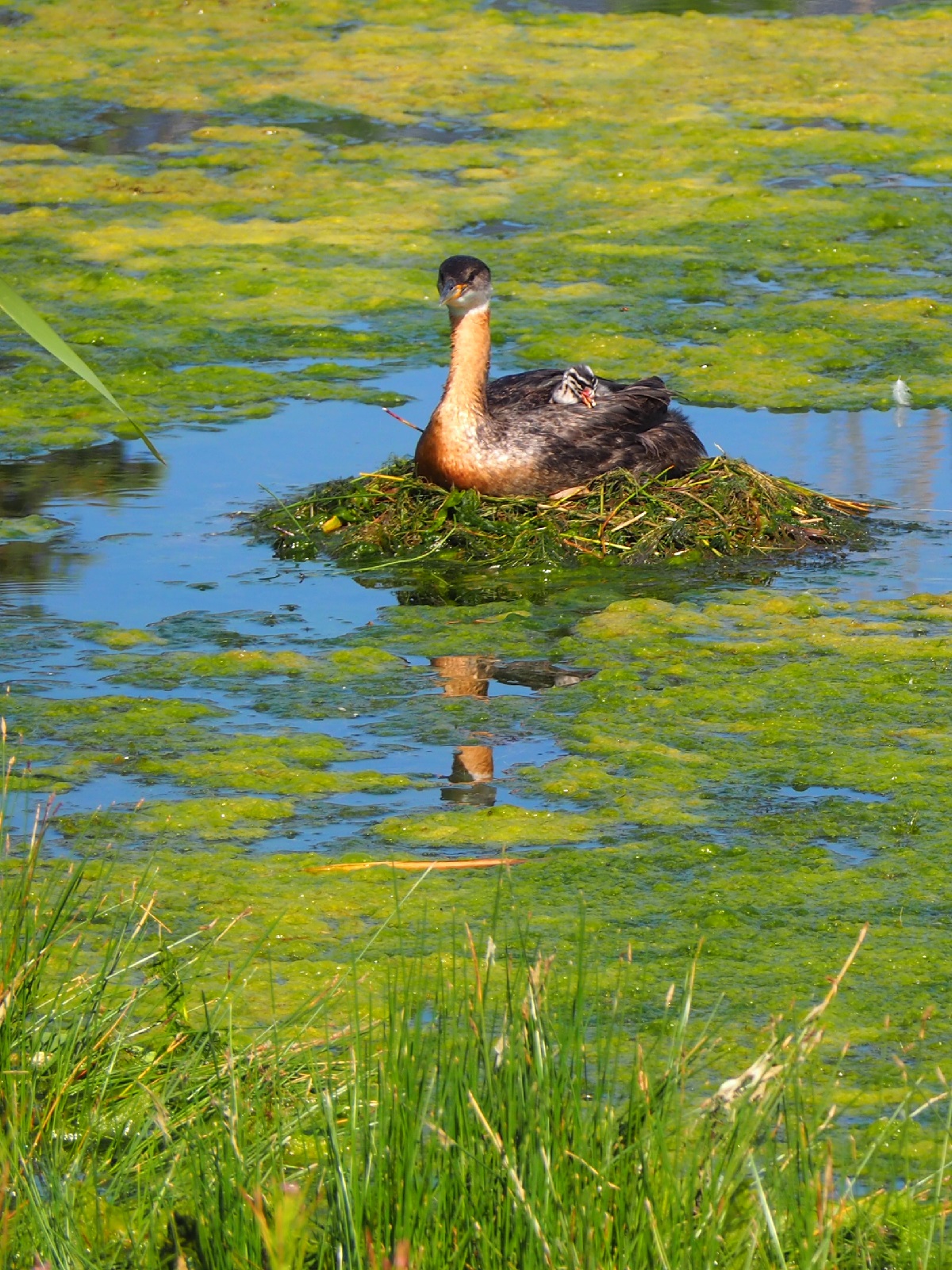
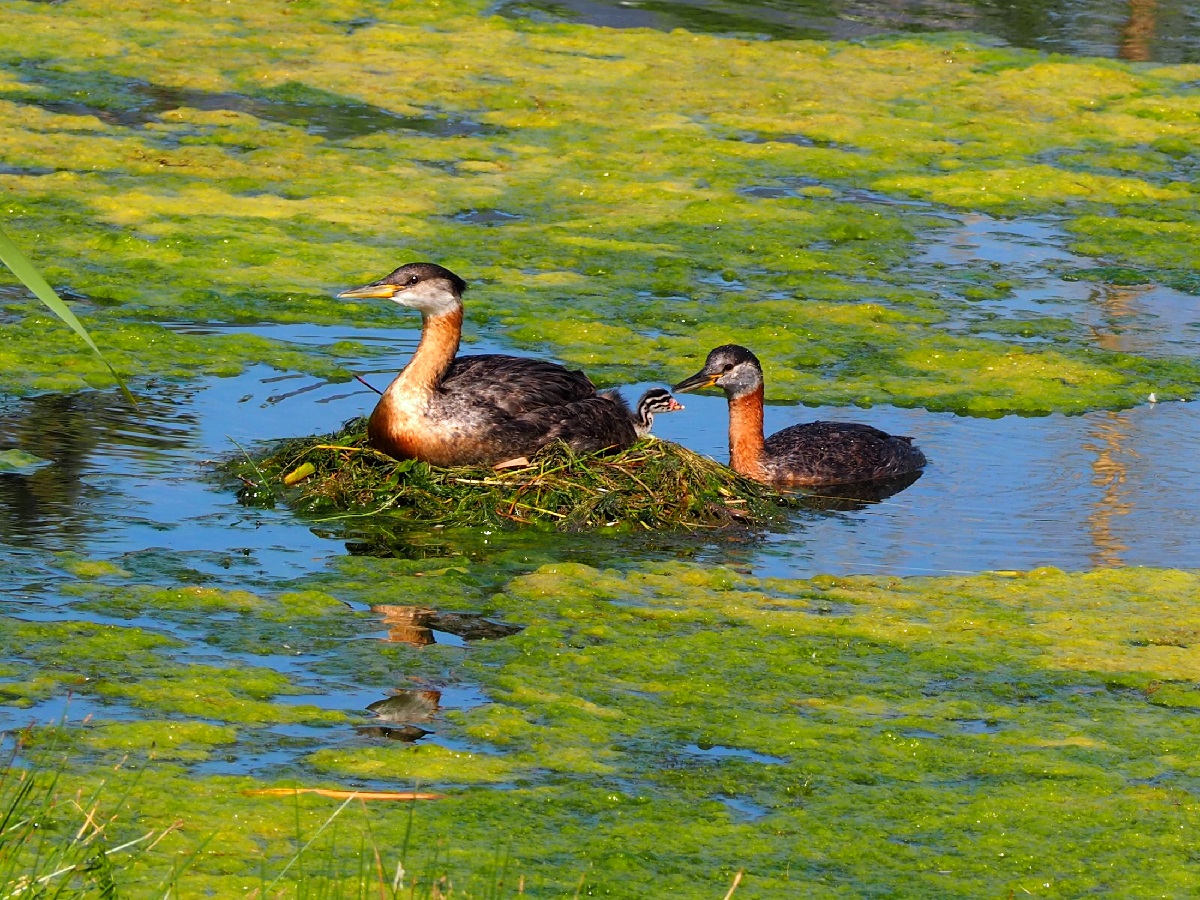
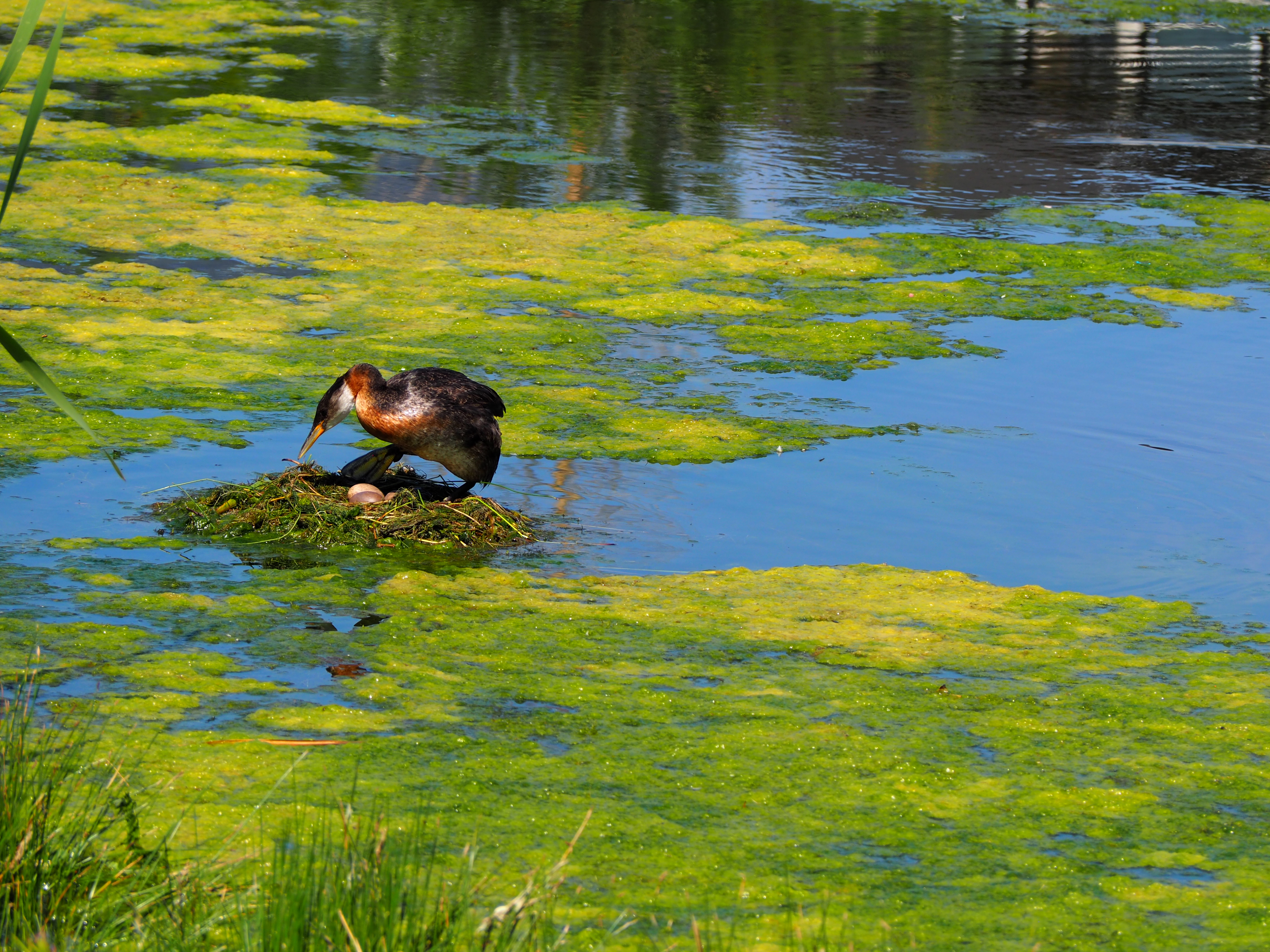
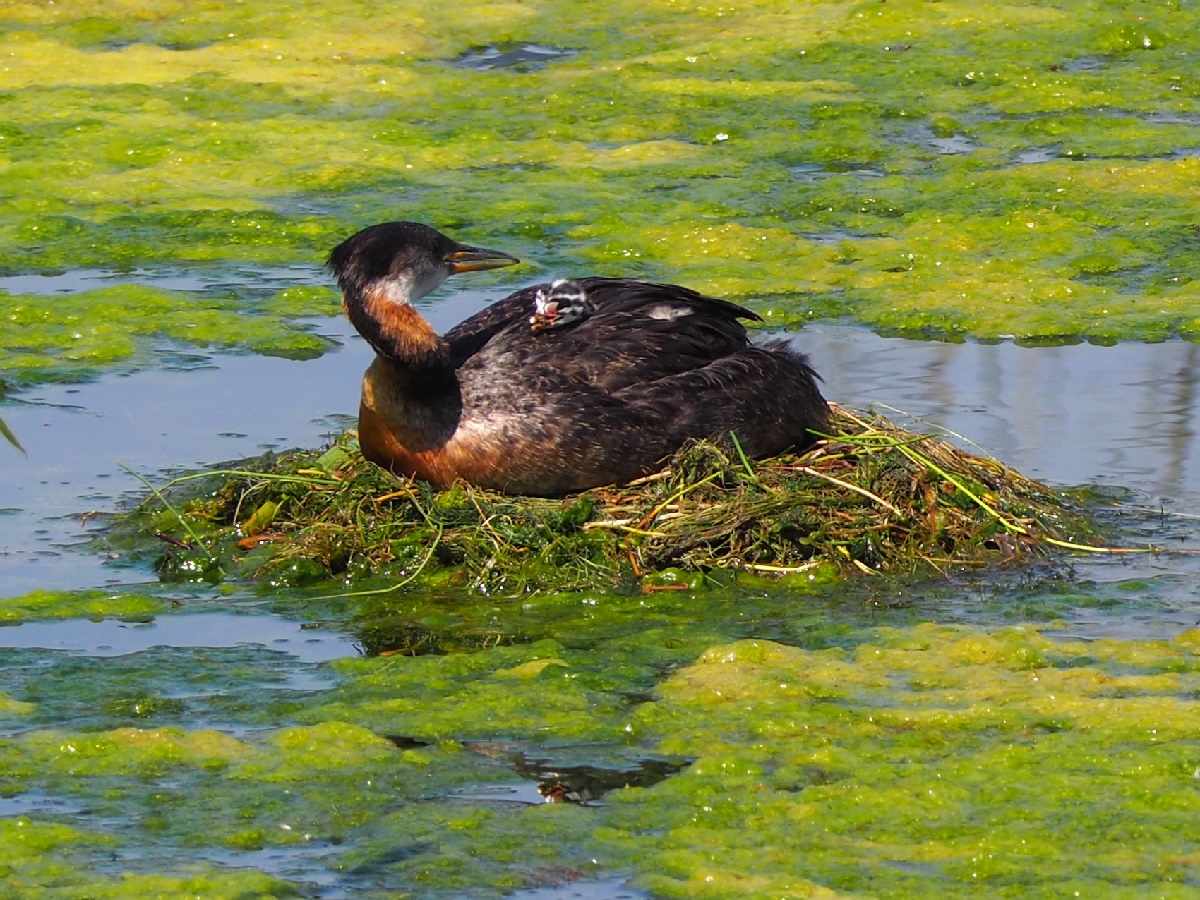
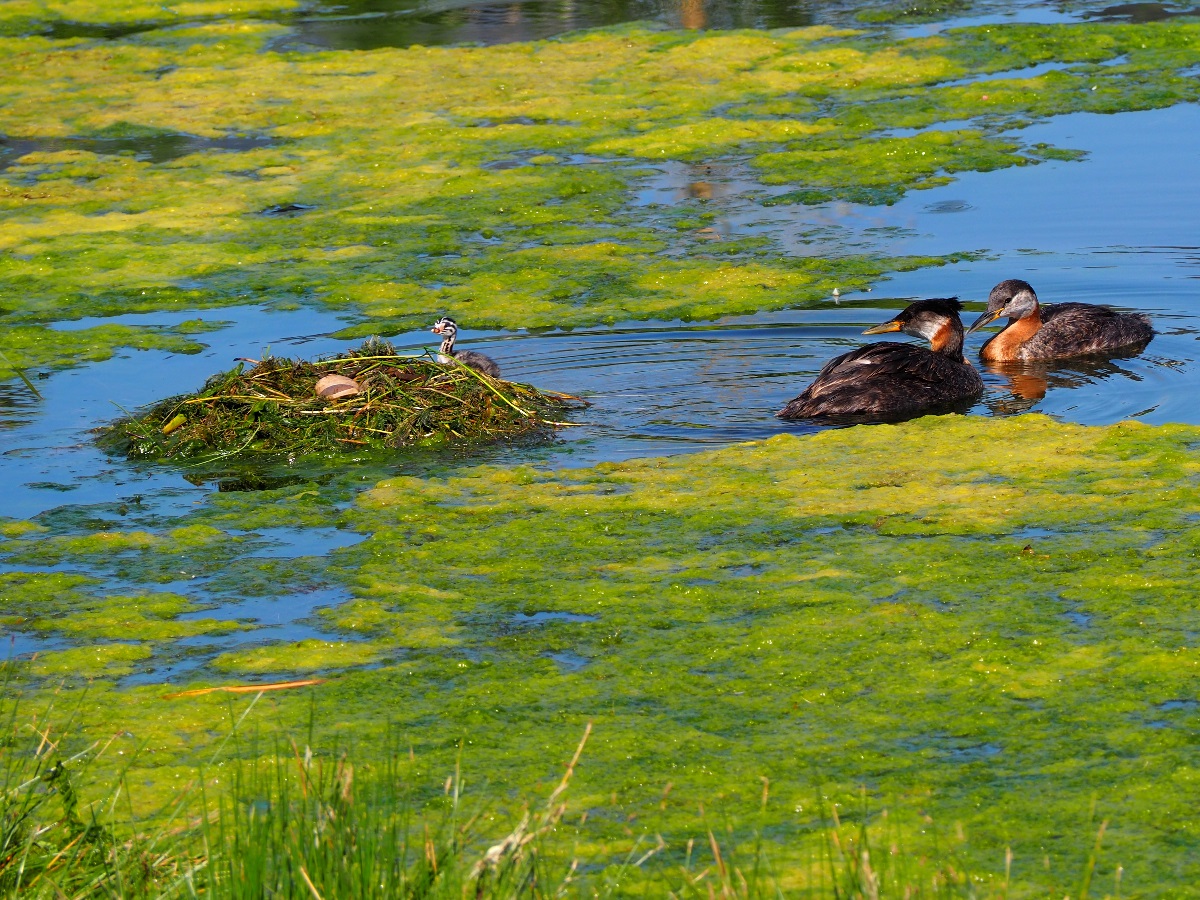
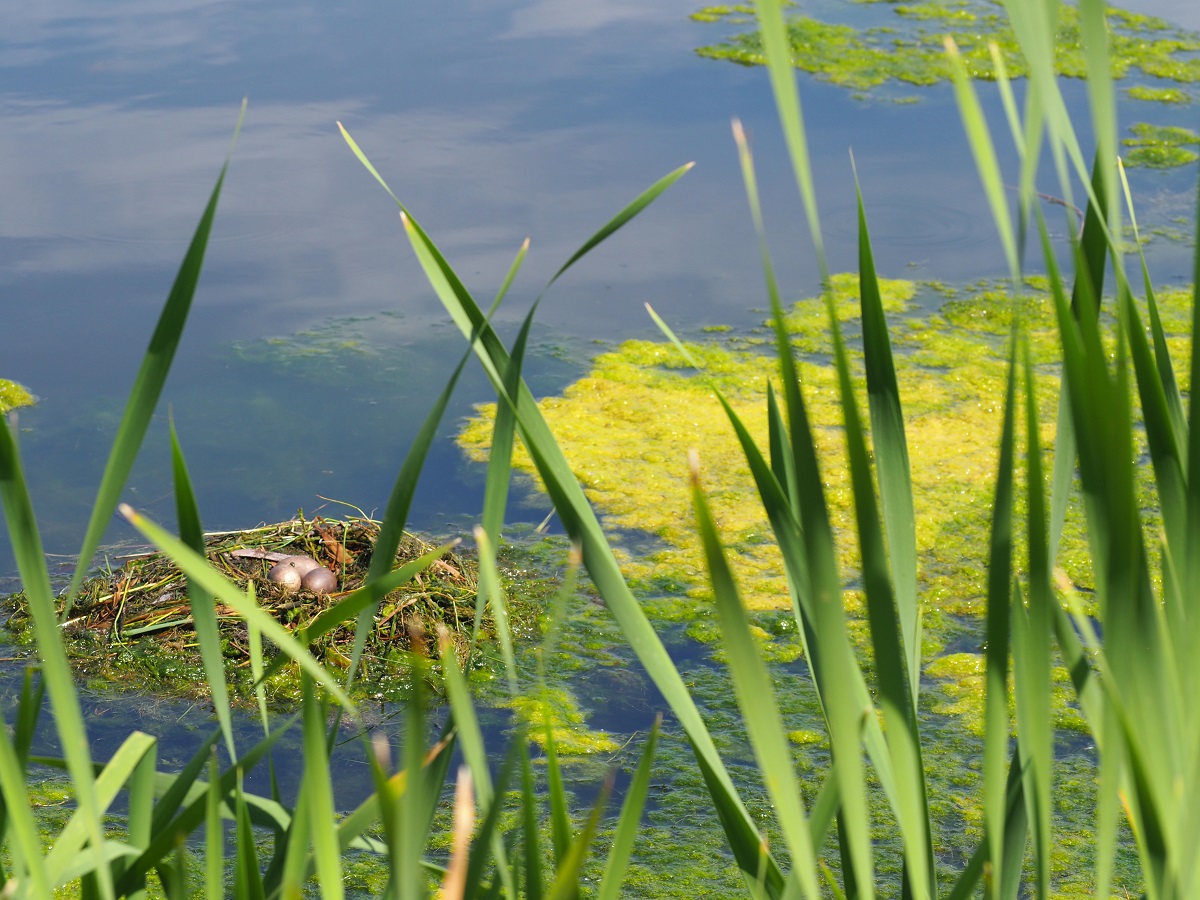
However, I was drawn to stay in Calgary because a few days earlier, while on my first photographic walk in a Stormwater Wet Pond on Calgary’s Country Hills Blvd, I had spotted a Red-necked Grebe incubating her eggs in a nest that was floating in the pond’s marshy water. I said that I would not miss the hatching show and decided to stay back, just in case luck was on my side. Of course, there were no guarantees that the eggs would hatch as the incubation period for the Red-necked Grebe can be between 20-23 days. The grizzlies, bighorn sheep, moose and elks as well as the beautiful trails in the Kananaskis Country would always be there but the hatching is an annual occurence.
STORY CONTINUES BELOW

A breakfast at 8:30 AM at the McDonald’s close to the location of the pond set the stage for me for the next 5 hours. When I arrived at the pond’s north side, I pulled out my binoculars and sighted the Grebe and its mate diagnolly across from me. As I learned, both the male and female incubate. I hurried, bypassing all the bird chirping and animals I saw along the path. When I reached the Grebes’ nesting area, I positioned myself about 25 metres from the nest.
Literally — and you have to believe me on this — I stood there on the same spot for 5 hours, moving a foot or two from time to time. I should have carried my picnic chair but it was a good 10 minute walk back to the car. How could I miss the arrival of a new baby? In total, I took 575 pictures and video, and never felt uncomfortable enough to leave the spot.
When I returned to my my car at about 2:15 PM, the iniside temperature read 38C. The morning shade that protected it when I arrived was gone. The actual outside temperature was 29C.
Out of hundreds of photographs and videos, I am pleased to bring to my readers and friends around the world this very special selection that tell my day’s beautiful story at the pond. It is a day I will cherish all my life.
Please DO NOT MISS the 4 fantastic short videos that follow the photographs.

~~~~~~~~~~~~~~~
~~~~~~~~~~~~~~~

~~~~~~~~~~~~~~~

~~~~~~~~~~~~~~~
~~~~~~~~~~~~~~~
~~~~~~~~~~~~~~~
~~~~~~~~~~~~~~~

~~~~~~~~~~~~~~~


~~~~~~~~~~~~~~~
~~~~~~~~~~~~~~~

~~~~~~~~~~~~~~~
~~~~~~~~~~~~~~~
~~~~~~~~~~~~~~~
~~~~~~~~~~~~~~~
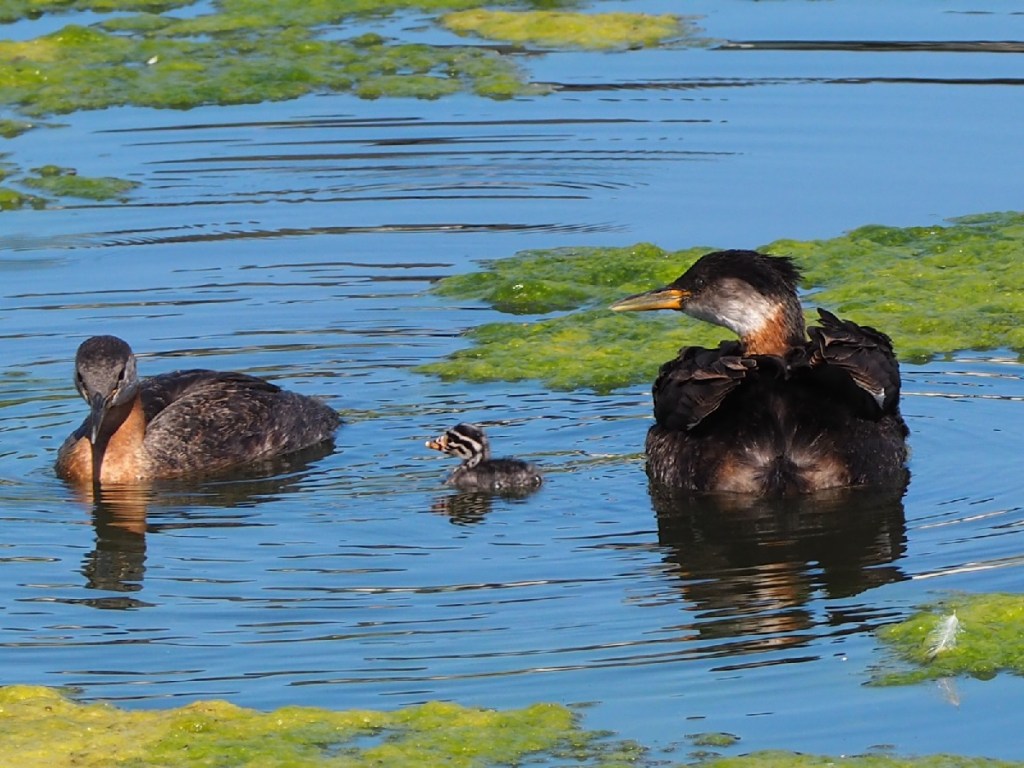
In this delightful 30 second video, we see the female Red-necked Grebe bring nourishment to her newborn chick but keeps it a distance such that the baby can’t grab it from where she is in the nest. The mom wants the baby to try out the real world by jumping into the water and win the prize! Amazing!
This is a beautiful unfolding story. I hope to update you on the birth of the remaining three grebettes in the coming days. I hope the eggs stay safe.
Date posted: July 23, 2023.
Last updated: July 23, 2023 (12:08 PM, EDT, typo corrections and video descriptions added.)
_______________________
Before departing this website, please review our Home Page for links to our fantastic photo essays. We welcome feedback/letters from our readers. Please use the LEAVE A REPLY box which appears below. Please share this article link with your friends and family members. Please also visit this blog’s sister websites Simerg for Insights from Around the World and Barakah for pieces on His Highness the Aga Khan, members of his family and the Ismaili Imamat. The editor may be contacted at mmerchant@simerg.com.
~~~~~~~~~
About the Red-Necked Grebe
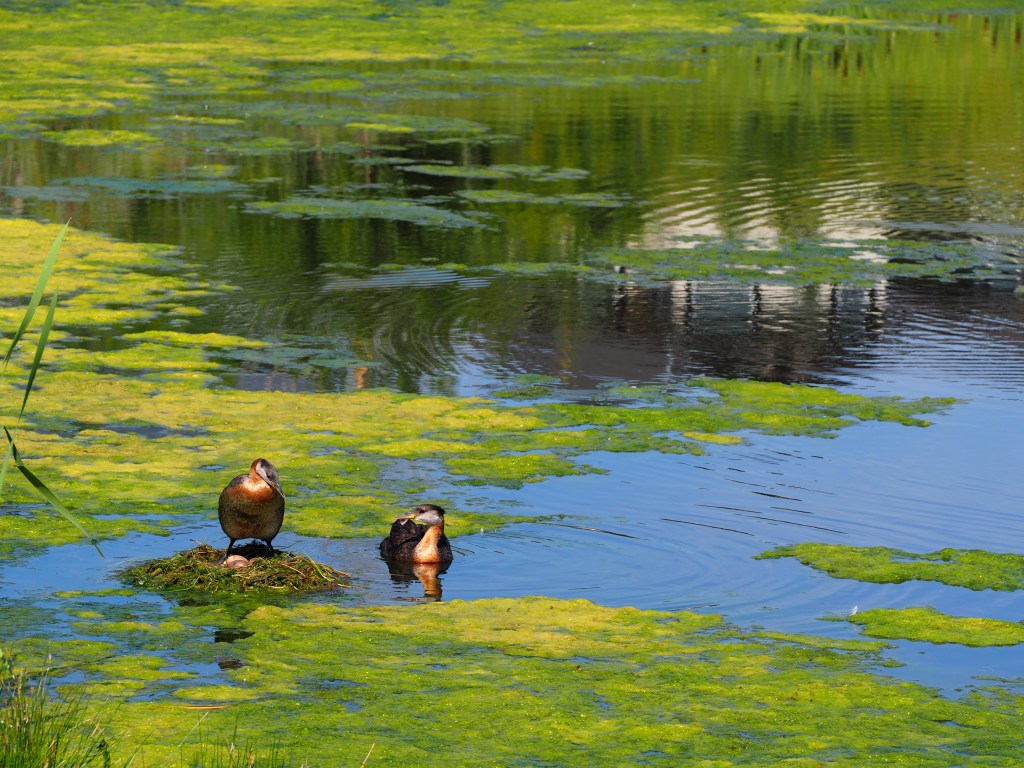
The red-necked grebe (Podiceps grisegena) is a migratory aquatic bird found in the temperate regions of the northern hemisphere. Its wintering habitat is largely restricted to calm waters just beyond the waves around ocean coasts, although some birds may winter on large lakes. Grebes prefer shallow bodies of fresh water such as lakes, marshes or fish-ponds as breeding sites (more at Wikipedia.)
Wonderful photos and great info on the Red-Neck Grebes! I live in Bronte, Ontario, which is just out side of Toronto. Grebes have been nesting in the harbour on a tire that was set up for them for at least 15 years, but this summer is the first time since 2015 that they have had success. Right now (August 25th) second pair has just hatched one a few days ago and hopefully the second egg will hatch soon. The first pair started in April and left with three additions a few weeks ago….fully grown. Tried to post a photo, but does not post.
Thanks for all your photos! Mike
Hello Mike: Thank you for your feedback. Please email the photo you were unable to post to mmerchant@simerg.com.