Lake O’Hara in Yoho National Park, British Columbia: A Paradise for Hikers and… the Lucky Lottery Winners!
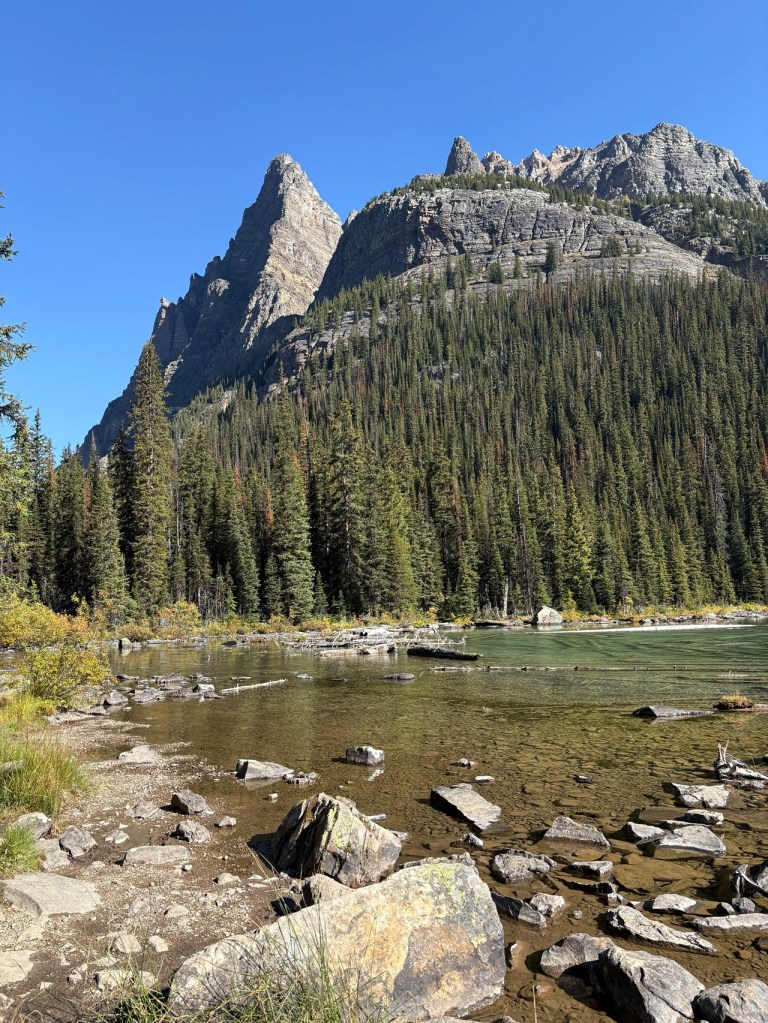
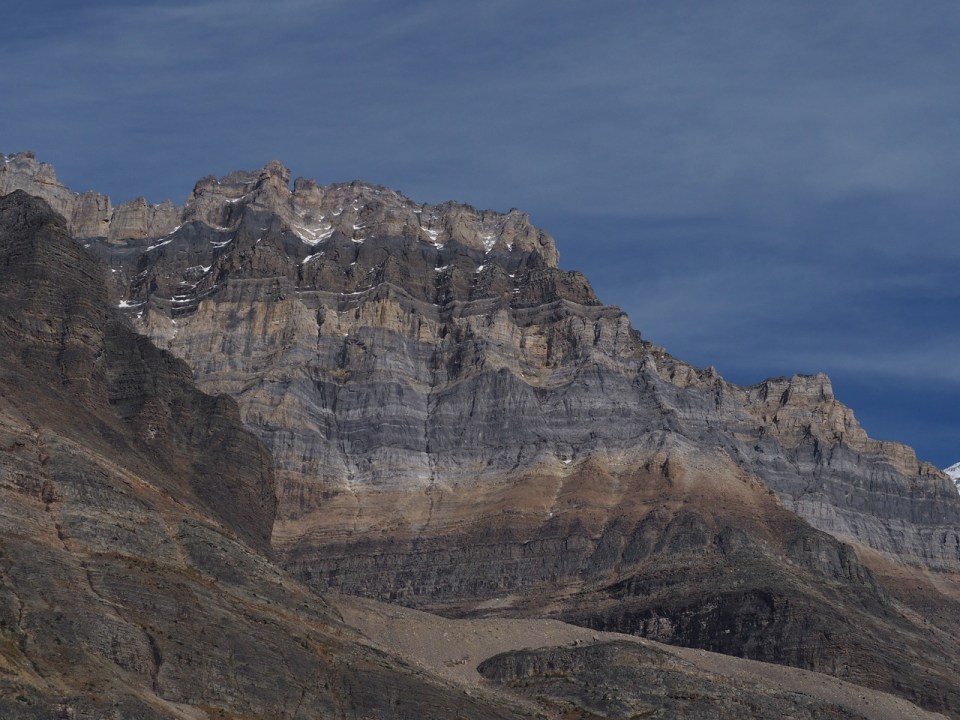
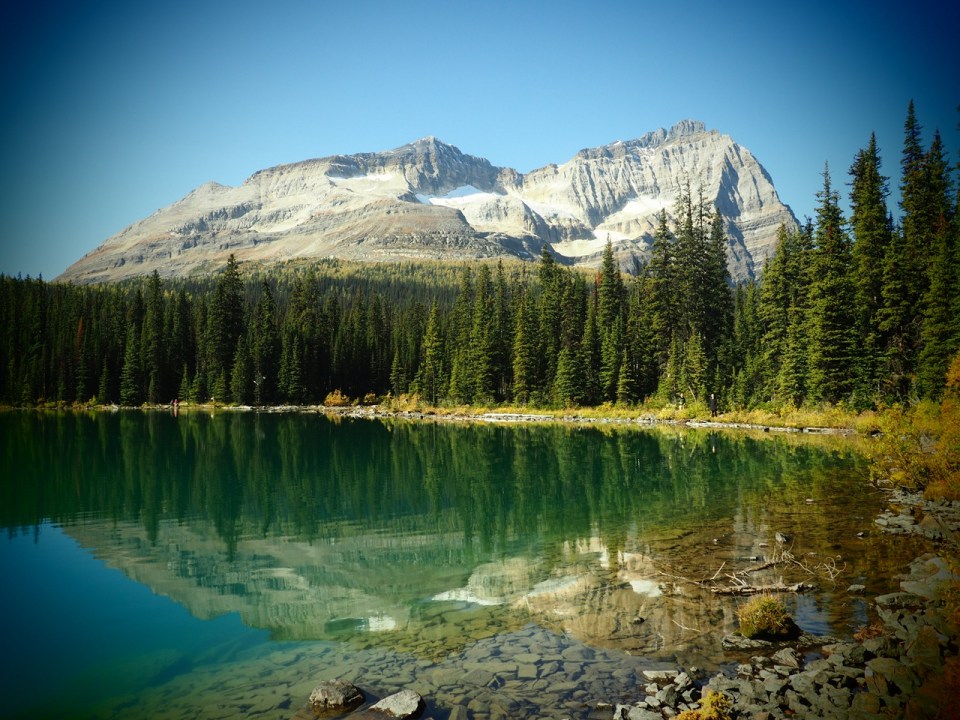
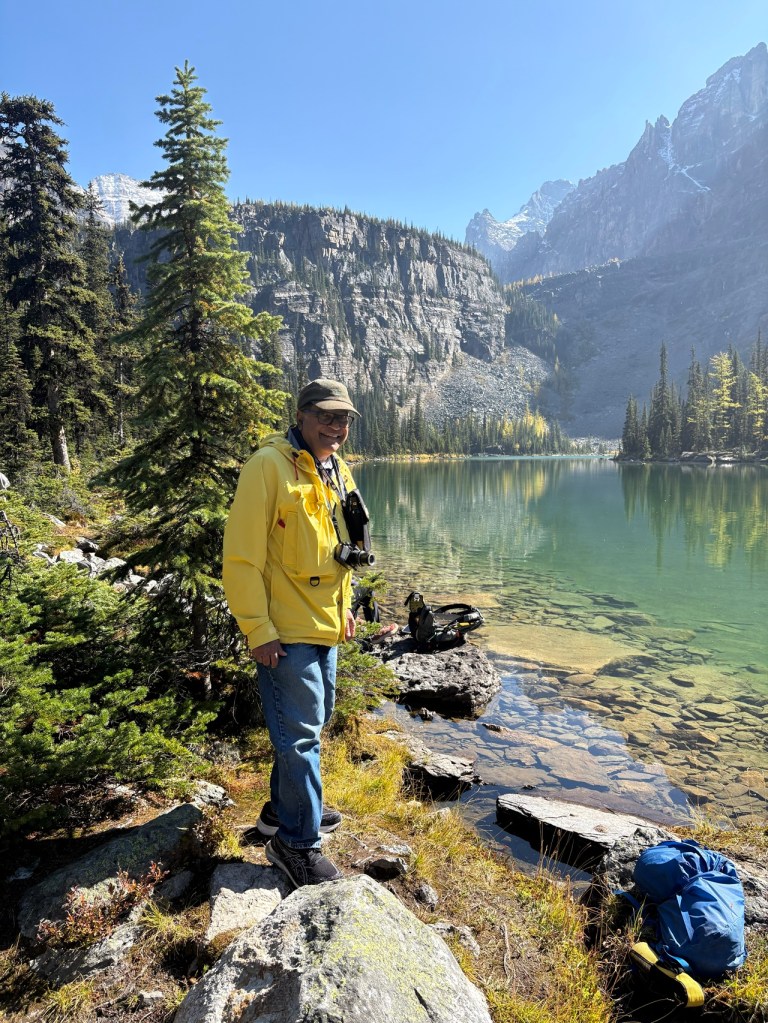
On a lake with a circular path, do you go clockwise or anticlockwise? As I stood on a small boardwalk overlooking Lake O’Hara, having won a lottery months earlier for a shuttle-bus spot to the lake, I decided to start my walk clockwise. My plan was to complete the so-called easy 3 km Lake O’Hara Shoreline Trail, then go the opposite way to fully absorb the scenery and take photos from different angles.
~~~~~~~~
~~~~~~~~
~~~~~~~~
~~~~~~~~
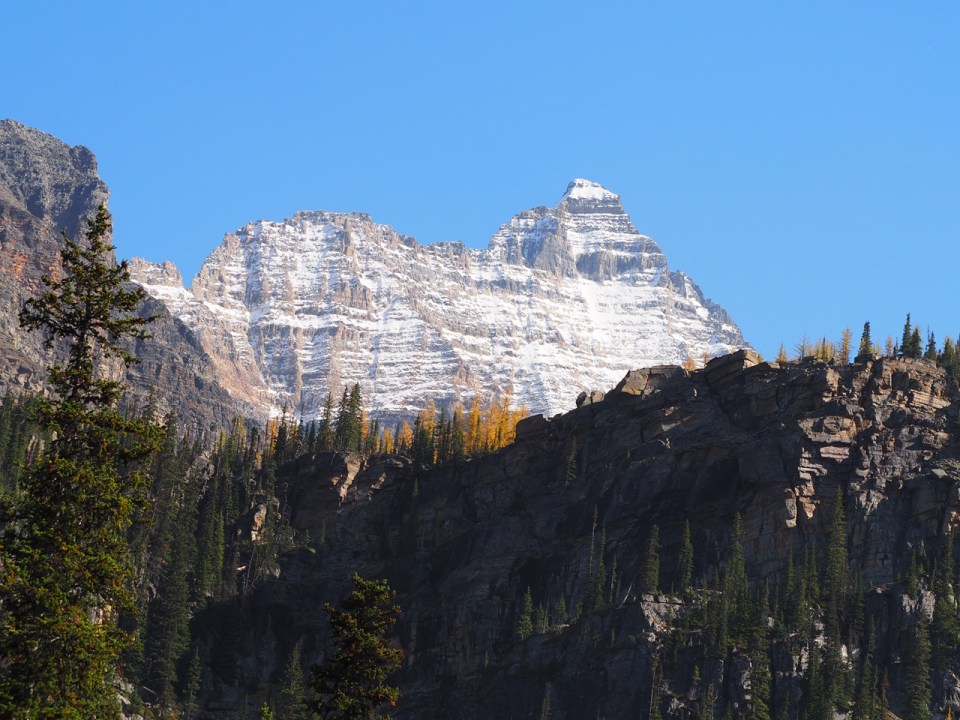
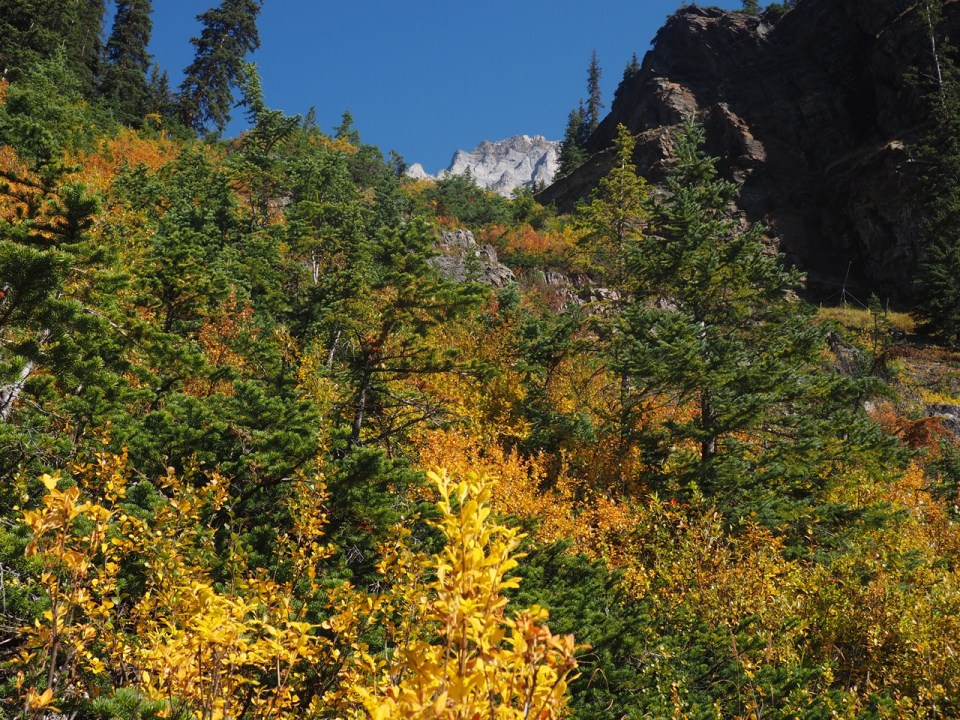
At around the 200-metre mark, as I turned my head to the right, I saw at some distance what appeared to me to be larch trees whose needles had turned gold. Larches look like evergreen pine trees in spring and summer, but their needles turn gold in autumn before they fall off. This phenomenon draws tens of thousands to Kananaskis, as well as Banff and Yoho National Parks in the fall, when visitors take to trails with a high concentration of larch trees, mostly found at higher elevations. You can also see them in Calgary at Confederation Park and Baker Park, and at the Aga Khan Garden in Edmonton, among other locations such as Hwy 11 between Red Deer and Rocky Mountain House.
Behind me was a wonderful and friendly couple, and I turned to them and asked, “Are those larch trees?” The gentleman replied, “Yes,” and added, “Ask me any questions; we have been coming to this location for decades.” They were in their seventies, perhaps even their eighties. I explained that I was there for only a day and wanted to enjoy the view around the lake, nothing beyond that. He suggested two places I shouldn’t miss, not far from the Shoreline Trail we were on — Seven Valley Falls and Mary Lake.
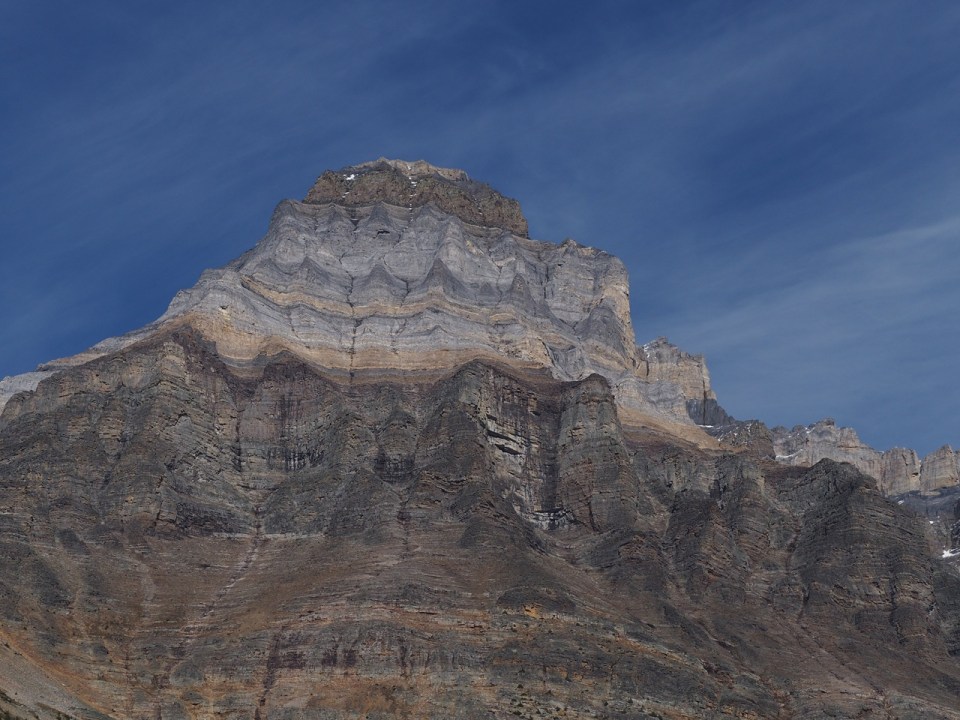
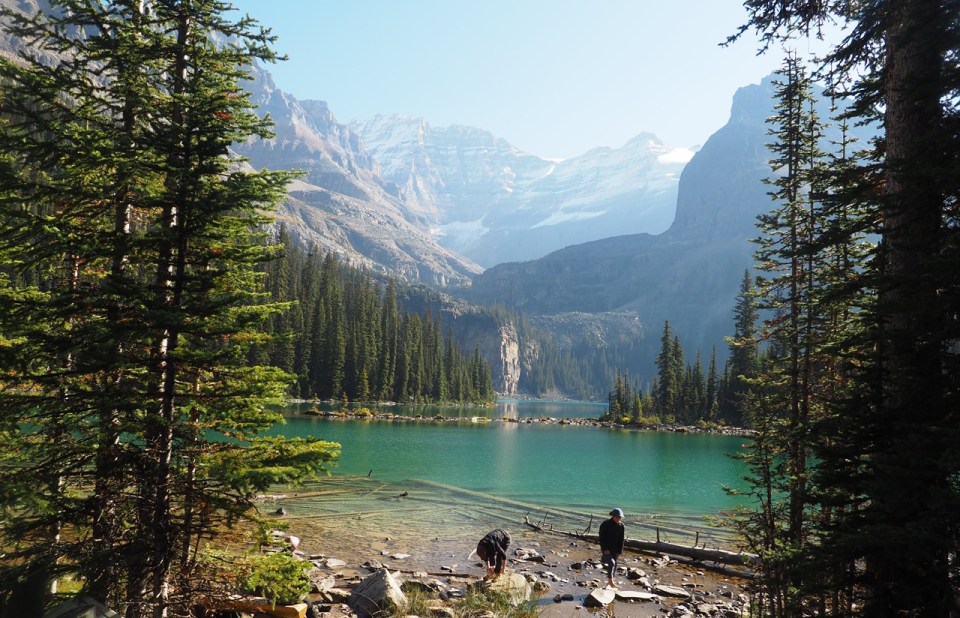
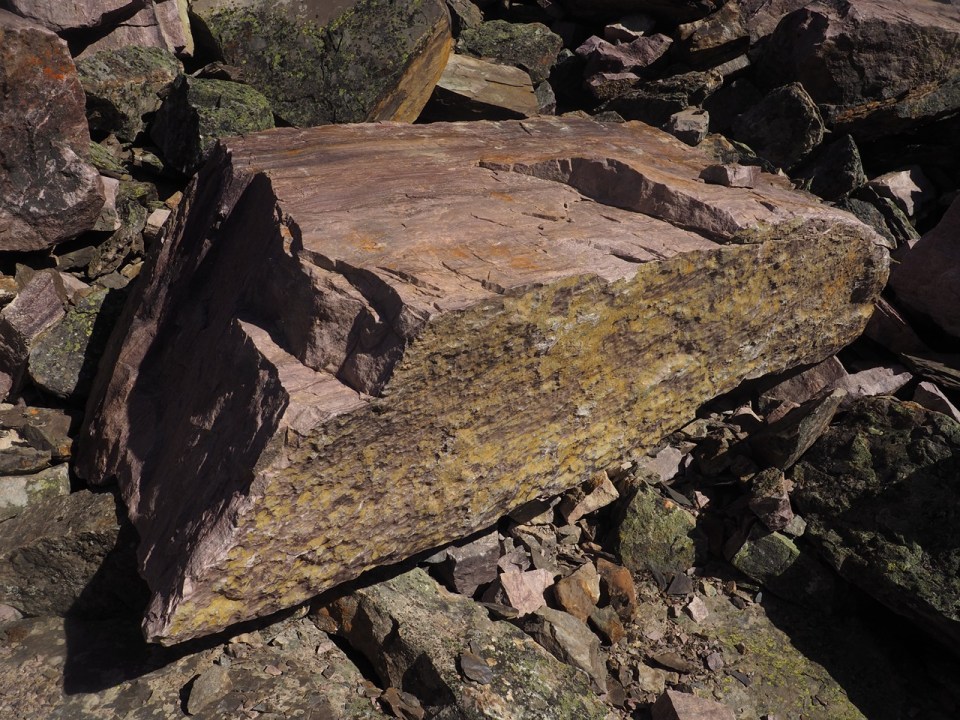
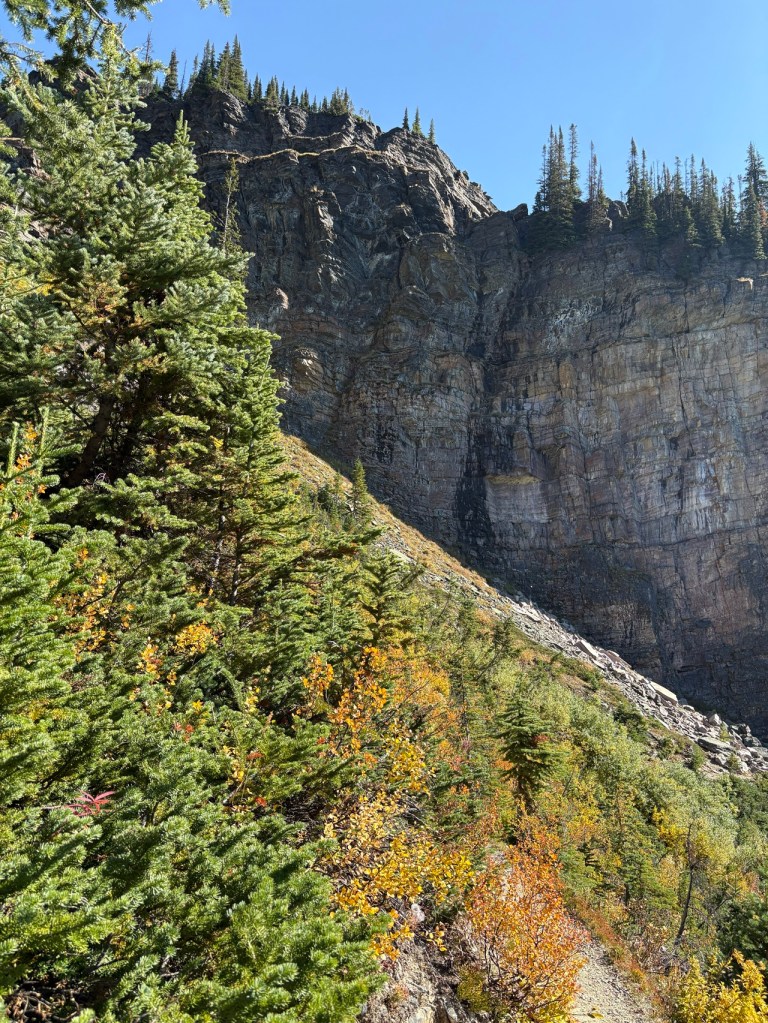
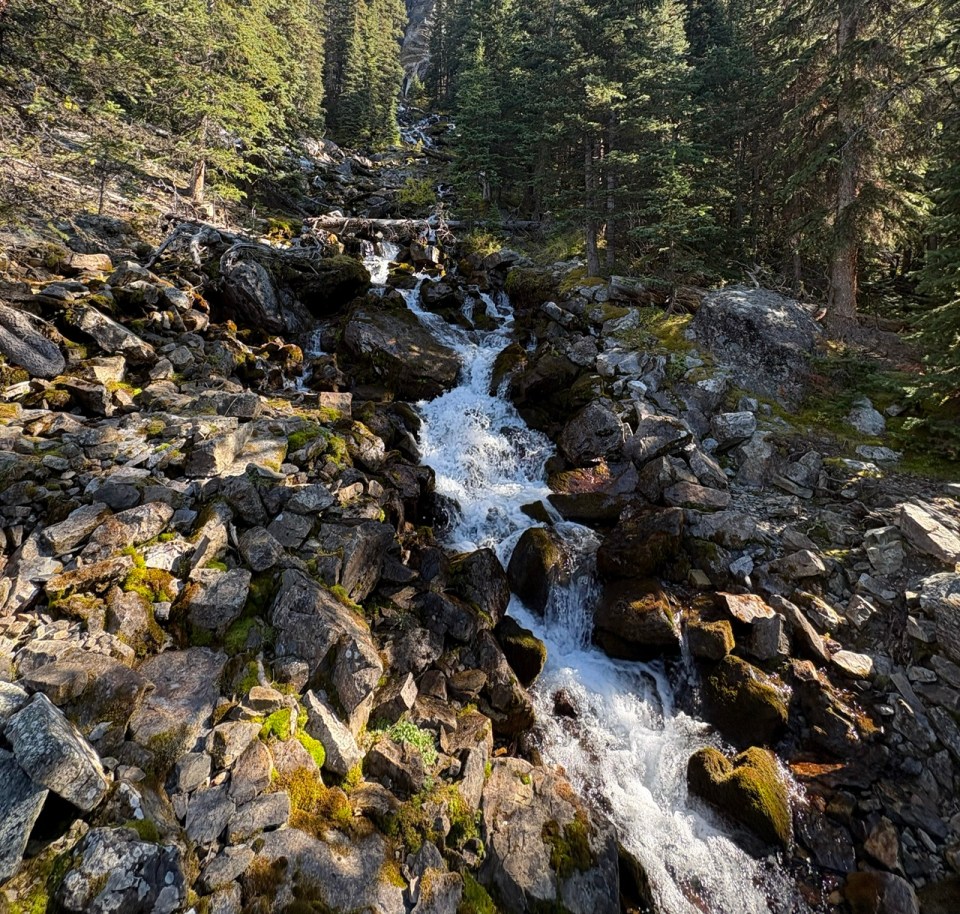
I must admit that as I went further along the trail, I was a little scared of the narrow ledges. I managed to brave them, though I had some difficulty on the rocky ones. When I reached the trailhead to Seven Valley Falls, the first of two suggested points to visit, I knew it would be troublesome to come back because of the rocky terrain I had seen at the beginning of the trail. I let that opportunity pass and continued to take my time admiring and photographing the stunning O’Hara Lake, along with the mountains and forests around it, including creeks where water flowed gently and at times with some force.
~~~~~~~~
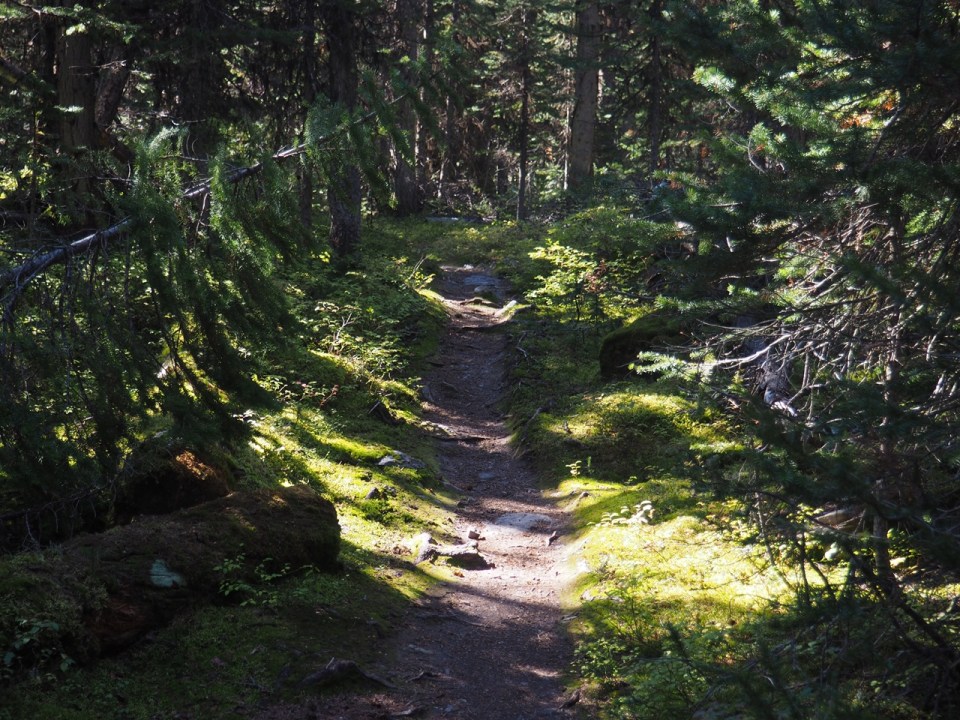
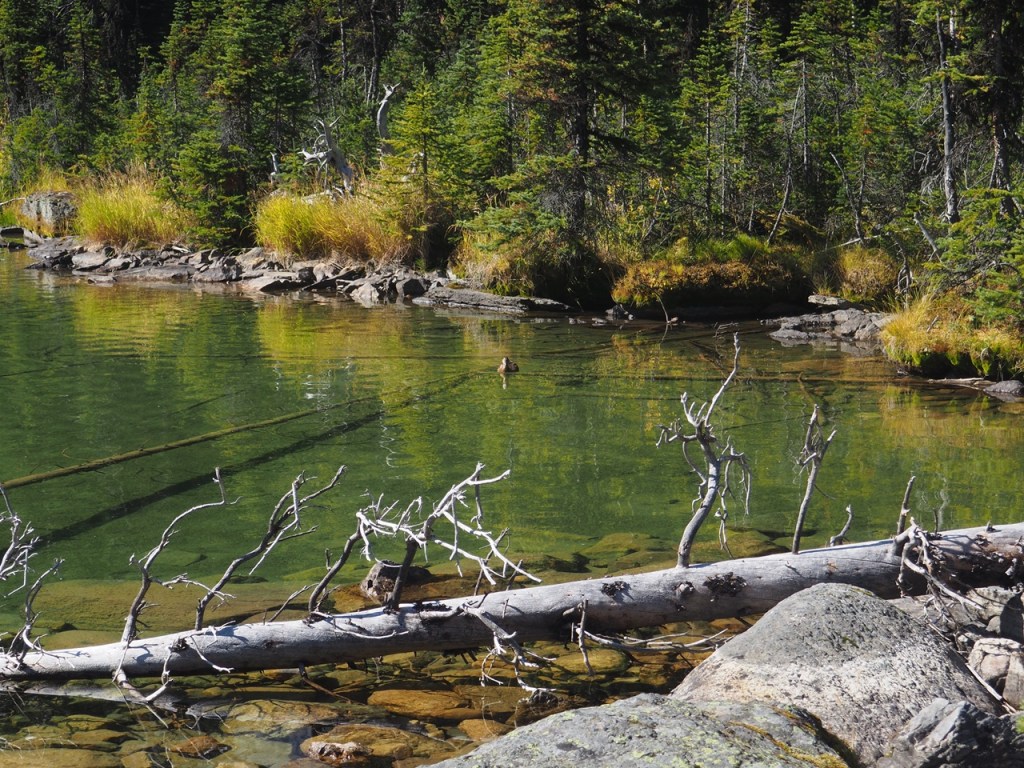
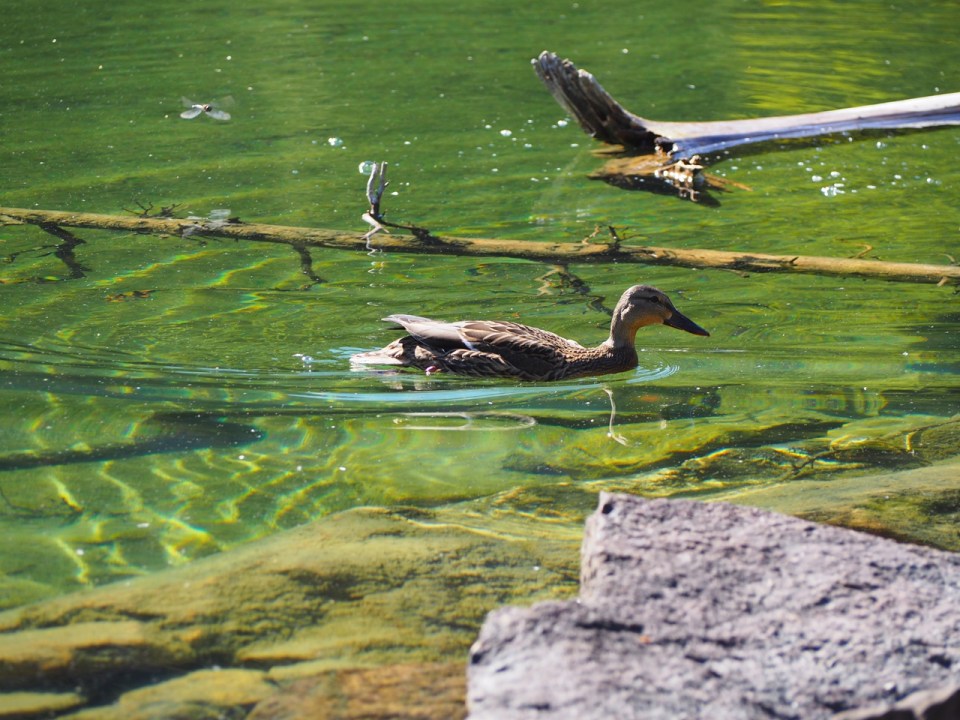
I finally reached the forested area with several trails, including the one recommended for Mary Lake. A 15-minute walk with a steady ascent brought me to Mary Lake, tinted green. I was completely by myself on this stunning little lake, with ducks swimming past me. This became my paradise for the next 90 minutes, with no sound except the ducks. Within that time, three wonderful ladies came to the spot and sat on the rocks near me. For them, Mary Lake had been a paradise for years. One told me that Lake O’Hara, with Mary Lake, was the finest spot she had visited in the entire province of British Columbia. For her, Mary Lake was heavenly because only a few visitors came by. Of course, hikers, in the short time they have, are more interested in conquering difficult trails than in spending quality time on a lake that is just “too easy to reach.” For me, the entire time at the lake was peaceful and soothing, and I could have stayed there for hours.
~~~~~~~~
~~~~~~~~
~~~~~~~~
~~~~~~~~
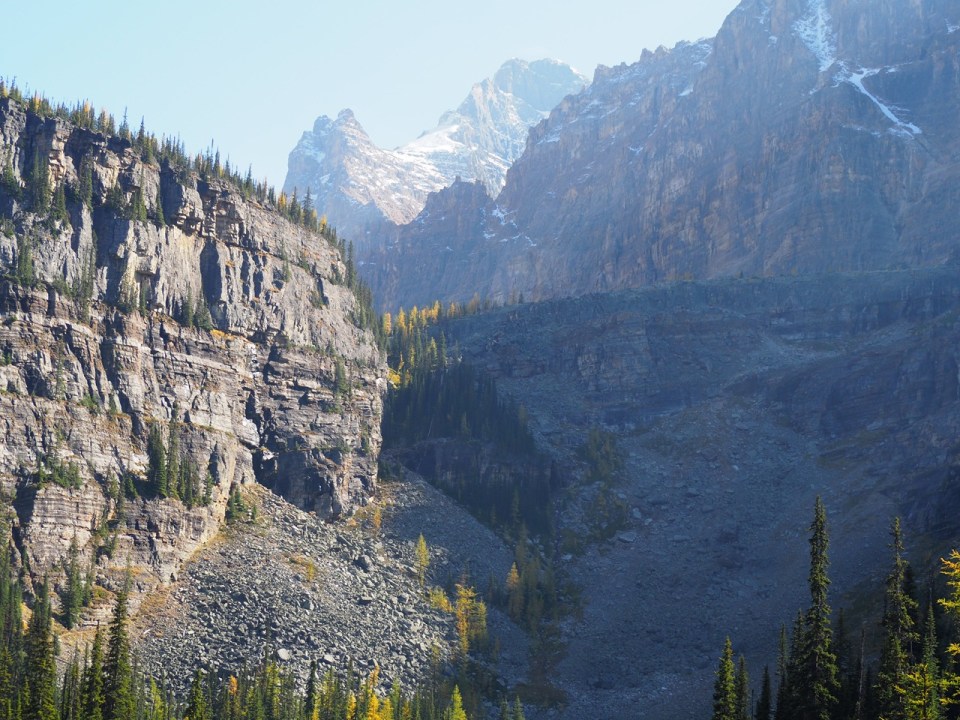
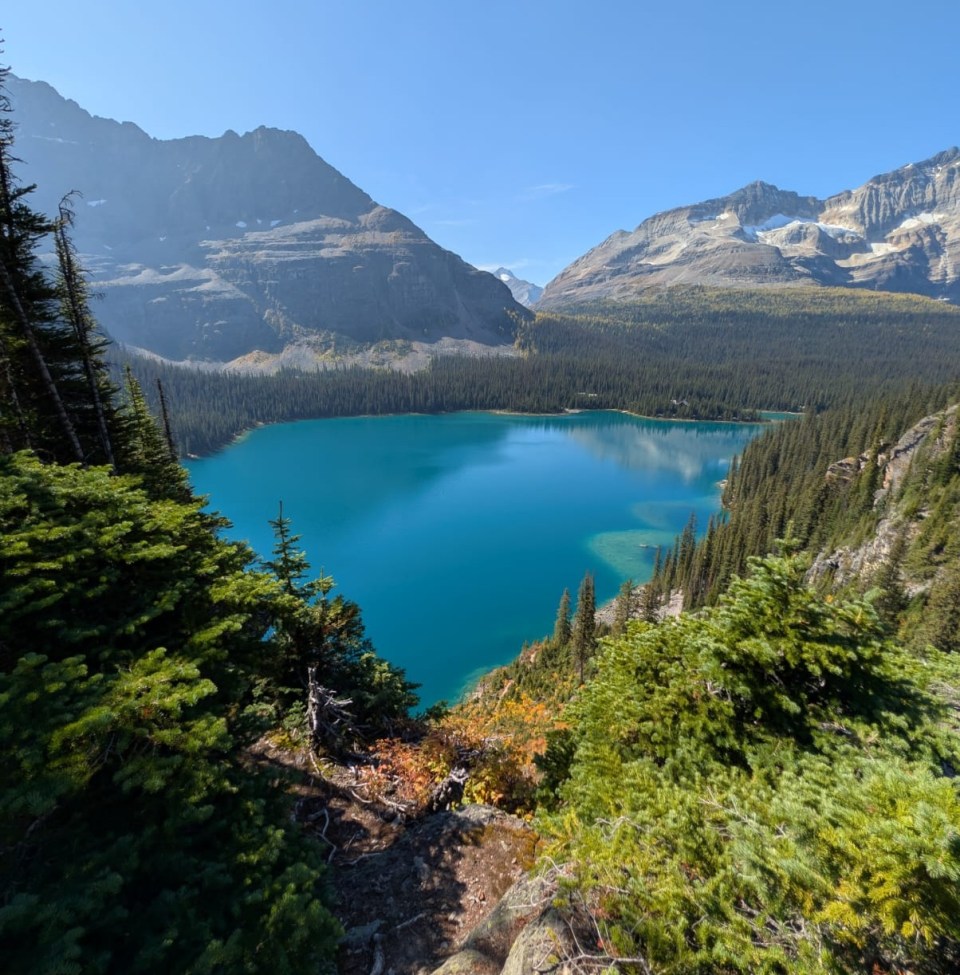
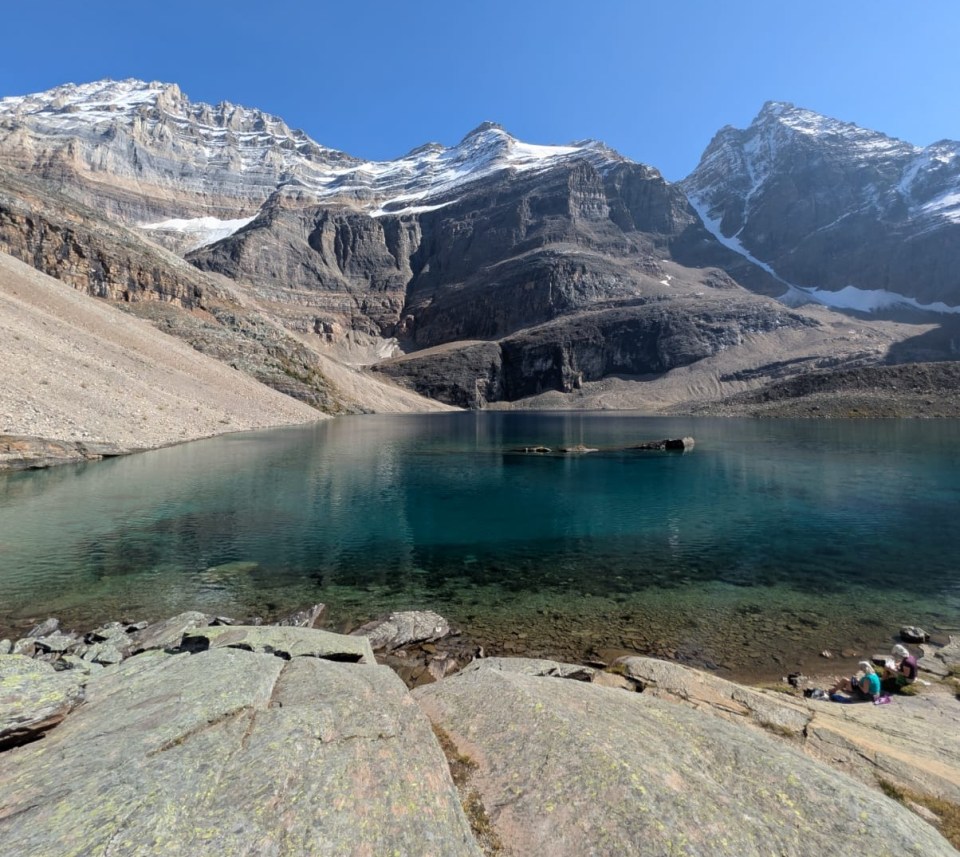
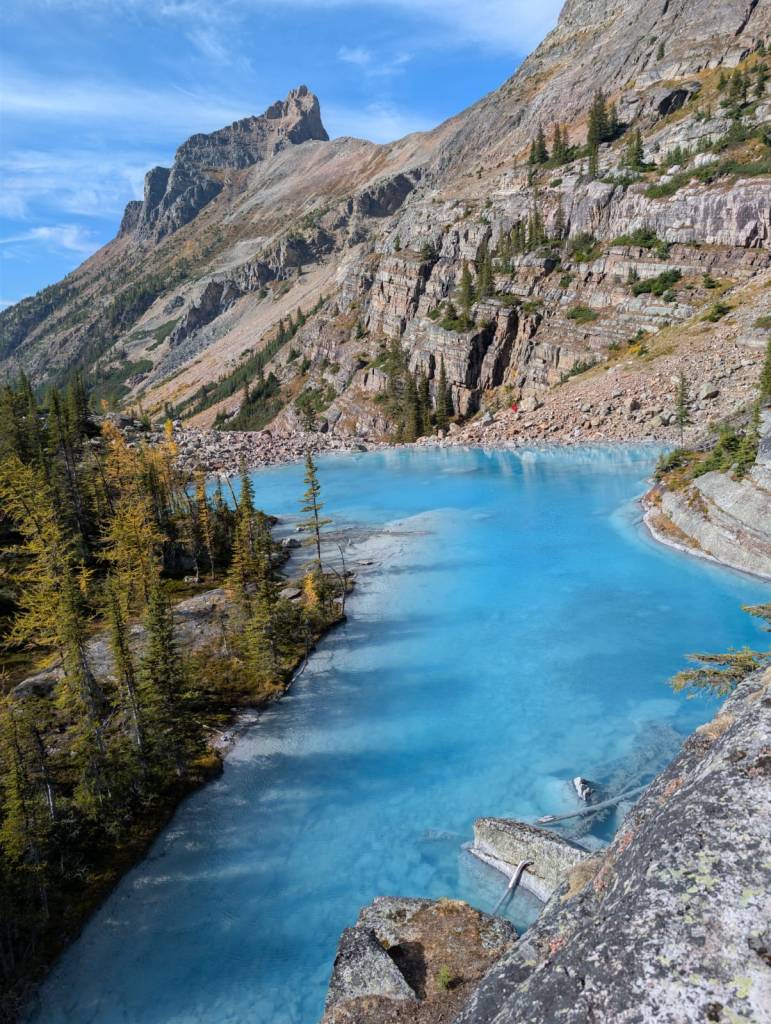
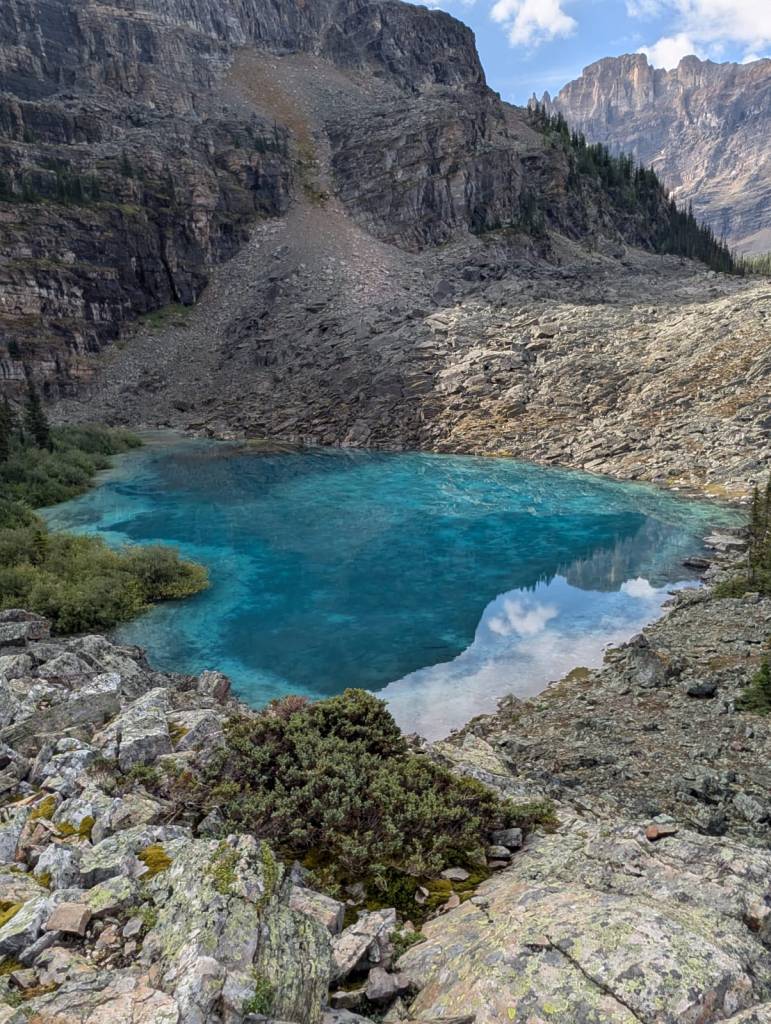
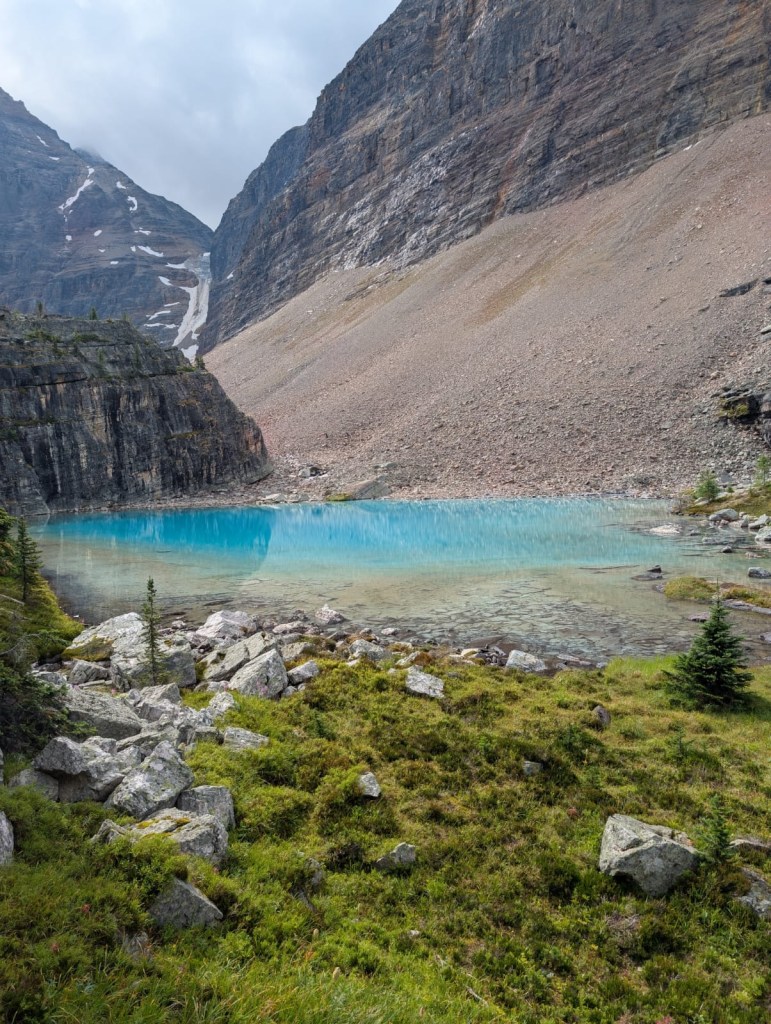
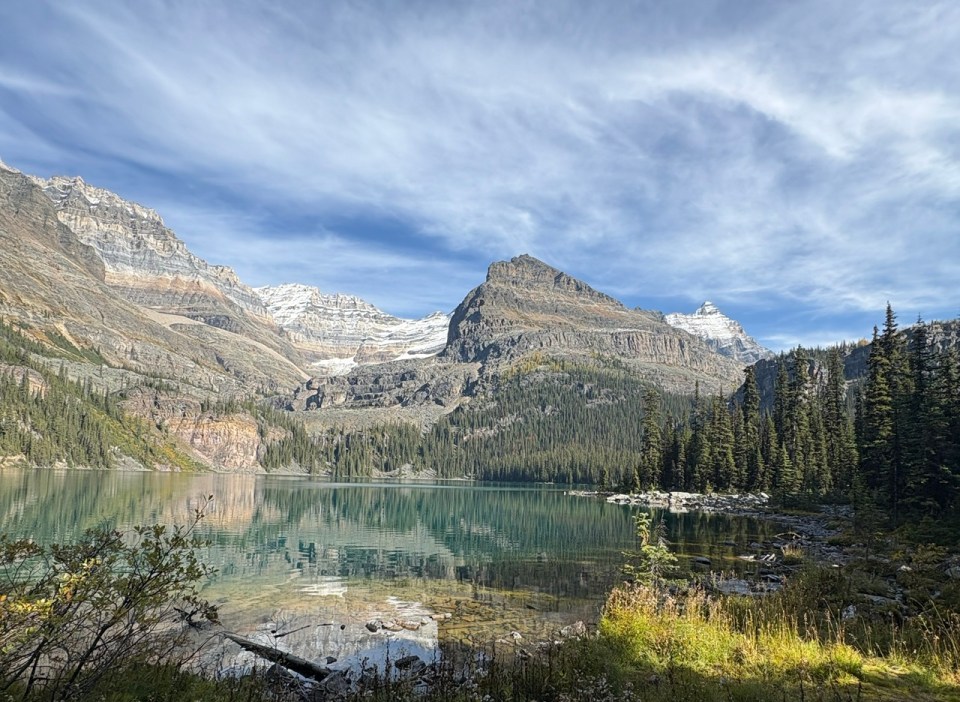
Back at the shuttle pick-up point, I struck up a conversation with four hikers who had walked 40,000 steps on moderate and difficult trails. One of them, from Calgary, shared beautiful lake photos from the trails he and his friends passed along the way. I am excited to share his photos in this post, as they will help both current hikers and potential hikers understand why Lake O’Hara is often referred to as a “Hikers’ Paradise.”
~~~~~~~~
~~~~~~~~
~~~~~~~~
I titled this post “Lake O’Hara: A Paradise for Lottery Winners” because visiting Lake O’Hara requires applying for a lottery at the beginning of spring for a shuttle spot. Only two buses per day, running from July to early October, can carry 36 passengers each to the lake. Campsites with limited spots are also reserved via lottery, which secures a place on additional shuttles for campers. Alternatively, you can stay at Lake O’Hara Lodge for at least three days, costing over $3,000 for a minimum stay at more than $1,000 per night, with a private shuttle service to the lodge. If you miss out on the lottery, a day visit means walking 11 km to the lake and returning the same way if the shuttles are full. This typically takes 2.5 to 3 hours each way, time that could be spent exploring the many other trails around Lake O’Hara Park.
~~~~~~~~
I was amazed to see young parents carrying their babies and toddlers in baby carriers, and a few toddlers even walking on the trails. Several visitors and hikers, including couples with children, didn’t get a shuttle space to and from the lake, and I saw them walking 11 km each way!
~~~~~~~~
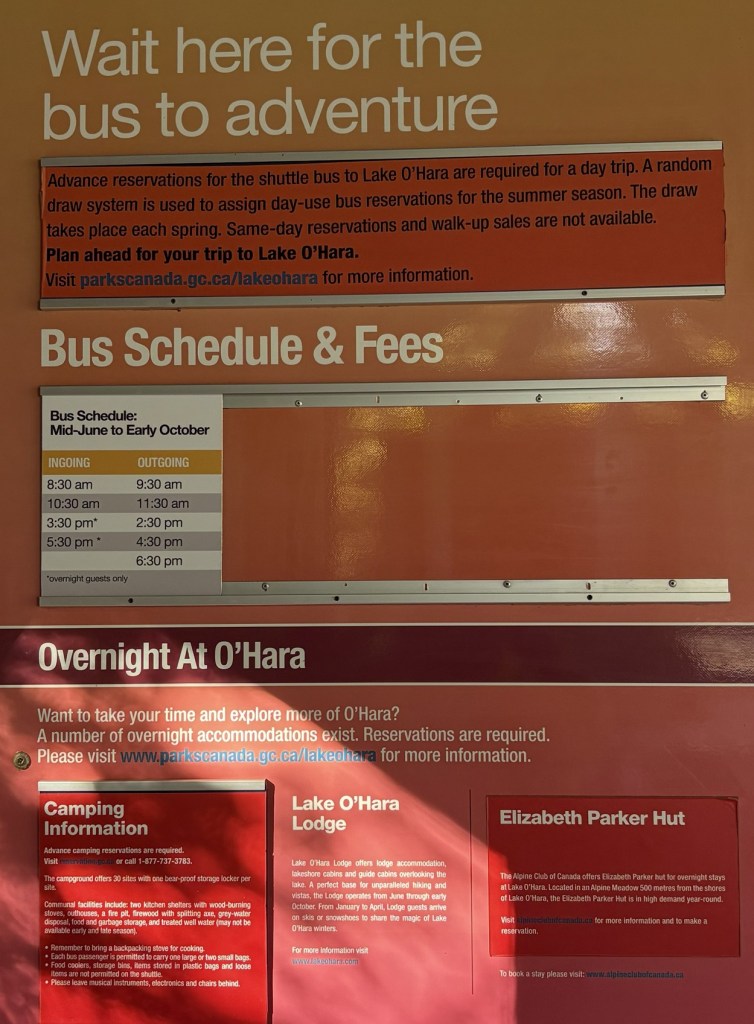
It was simply an amazing trip, an experience to savour for the rest of my life, for the scenery as well as the thrill of applying for a lottery, winning one, and waiting for months before finally making my trip on a fine Sunday, September 20, 2026. The site is limited to around 250 people a day, unlike the nearby Lake Louise and Lake Moraine in Banff National Park, which attract thousands.
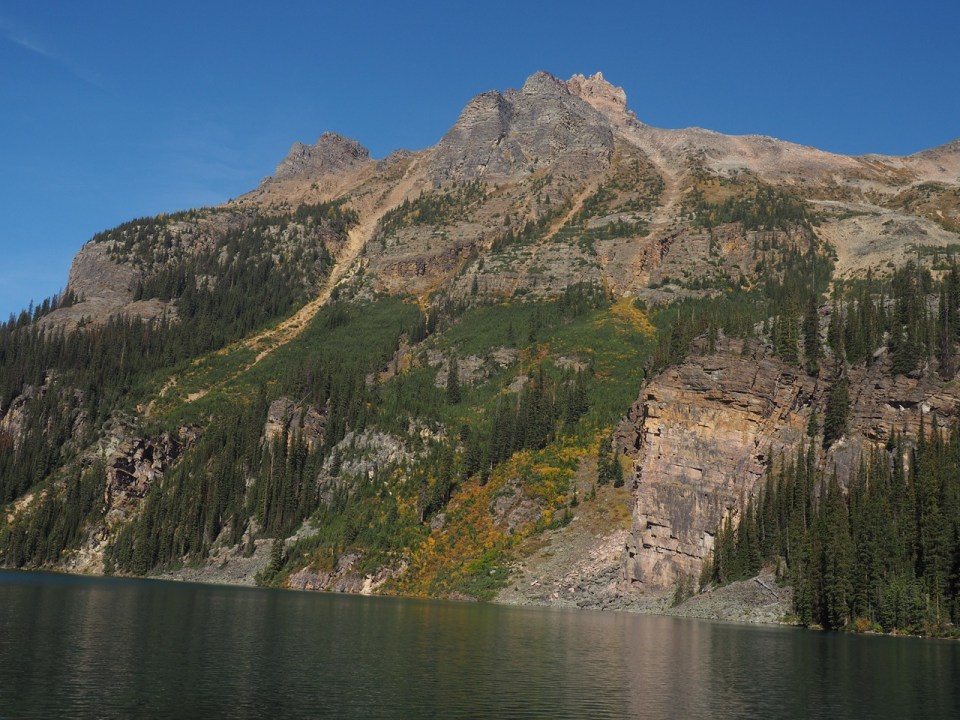
At most, during my trail walk around the Lake and into Lake Mary, I encountered no more than 20 visitors. No mobiles overhead blocked my beautiful views of the lake. With my 11 km ride into the Lake, I left civilization behind with every bump on the unpaved road.
Date posted: September 26, 2026.
_______________
For more information about Lake O’Hara and its trails, click Parks Canada. For reservation details about the 2026 season, click HERE. This will give you a good overview of what to expect for the 2027 season. Shuttle bookings will commence in March 2027, so try to be the first on the wagon when the announcement is made.